FIELD NOTES / November 07, 2026
Stargazing Near Lone Pine: A Guide to the Eastern Sierra Night Sky
Plan a stargazing trip near Lone Pine with tips on moon phases, weather, safe viewing, night photography, and protecting dark skies.
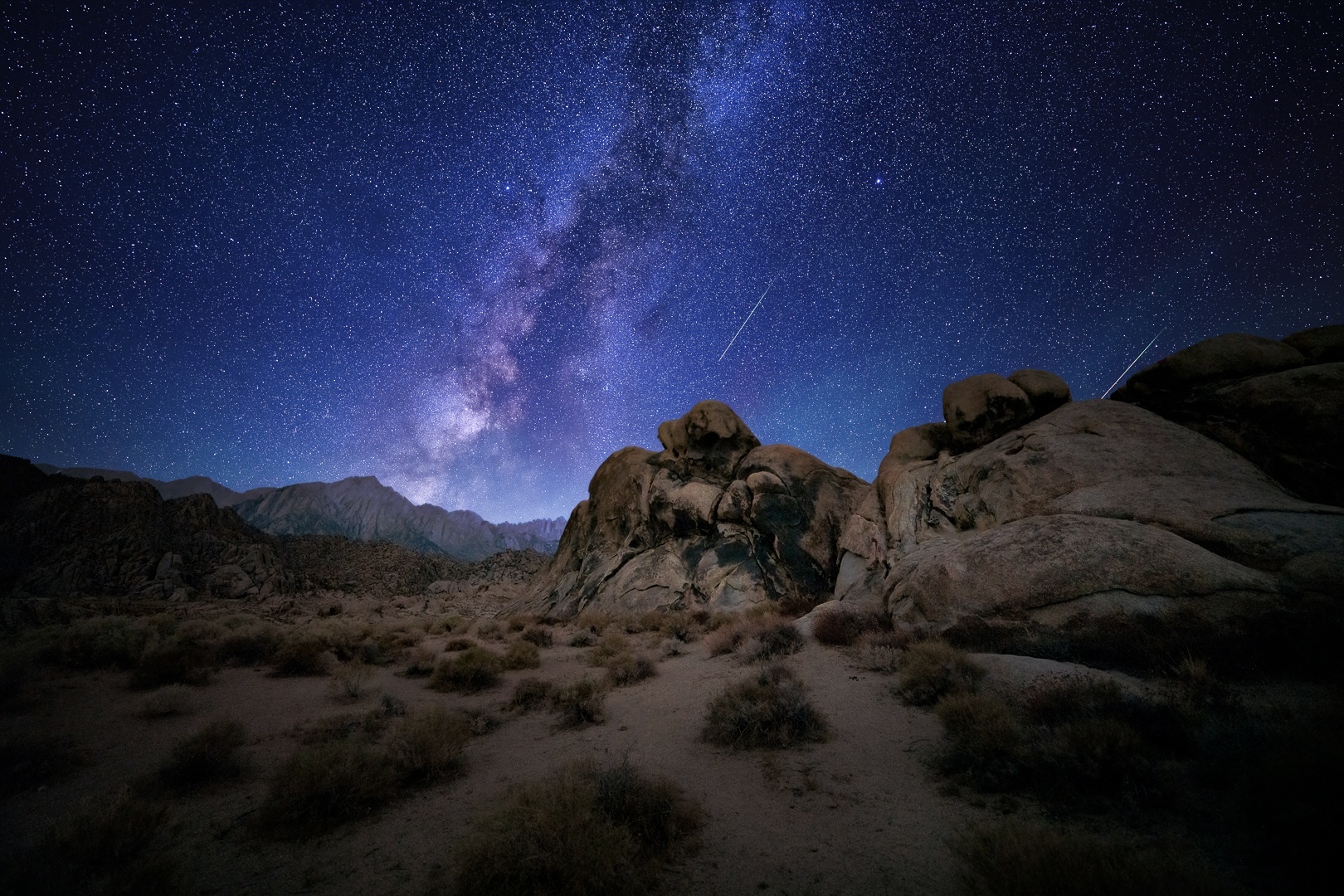
As the last light leaves the Sierra Nevada, the shape of the mountains begins to soften. The boulders become silhouettes, the air cools, and the first bright points appear overhead. Give the sky a little more time, and a familiar landscape near Lone Pine can feel entirely different.
Stargazing in the Eastern Sierra does not require a telescope or a complicated plan. It does require a little preparation: a clear forecast, a suitable place where nighttime use is permitted, warm layers, and enough patience to let your eyes adjust. Here is how to make an evening under the stars a memorable one.
Why stargaze near Lone Pine?
Lone Pine sits between open desert scenery and the Sierra Nevada, making the surrounding landscape a dramatic foreground after sunset. The Alabama Hills are among the places where visitors enjoy stargazing, according to the Bureau of Land Management. What you can see on a particular night depends on clouds, smoke, moonlight, nearby lighting, and your location.
Photographs of the Milky Way are inspiring, but a camera can reveal colors and details that your eyes may not see in the same way. Let the night be its own experience: a few constellations, the glow of the Moon, or a meteor can be worth the trip even when the sky looks different from a photograph.
Choose a safe, permitted viewing spot
Before you leave, check current land-management guidance, access hours, parking restrictions, and road conditions for the exact place you plan to visit. Rules can differ between trailheads, roads, campgrounds, and parcels of land. Respect private property, closures, and posted signs, and park only where permitted. Do not stop in the road or pull onto vegetation.
Arriving before sunset helps you find your bearings while you can still see uneven ground and road signs. Choose a stable place away from traffic and steep edges, and keep your outing within your group’s comfort and abilities. Download directions in advance because mobile service may be unreliable.
If you plan to stay overnight, check the specific camping rules. In the Alabama Hills, camping is restricted to designated sites and the BLM provides a free camping permit; a permit does not reserve a site. Other locations may have different rules, and a trailhead or parking area should not be assumed to allow overnight parking.
Check the Moon before choosing your night
For a darker sky and a better chance of seeing faint stars, look for a clear night when the Moon is not bright and high in the sky. The days around a new Moon can be useful, but moonrise and moonset times matter too. Check a reliable Moon calendar for your date and location.
A bright Moon is not a bad night out: it can illuminate the landscape and is fascinating to observe through binoculars. It simply makes faint stars harder to see. Decide whether you want a darker star-filled sky or a moonlit view and plan accordingly.
Watch the weather and the season
Clear skies are helpful, but visibility can also be affected by smoke, dust, and haze. Check the forecast near your trip and again before leaving town. Desert temperatures can drop after sunset, and the higher Sierra can be much colder than Lone Pine. Bring layers even after a warm day.
Every season has a different sky and different practical considerations. Summer evenings can be warm at lower elevations, while winter nights bring longer hours of darkness and colder conditions. In any season, storms, high winds, road closures, or wildfire smoke may call for a different plan. Do not venture onto mountain roads or trails without suitable preparation for current conditions.
What to bring for stargazing
Bring warm layers, water, comfortable shoes, and a blanket or chair. A flashlight or headlamp is essential for finding your way; a dim red-light setting can help preserve night vision when it is safe to use one. Use whatever light is needed to move safely over uneven ground, then dim it once settled so others can enjoy the sky.
A downloaded map, charged phone, backup light, and a plan shared with someone back home are useful, especially where service is limited. Pack out everything you bring. Binoculars and a sky map can add to the experience, but your eyes are enough to get started.
Give your eyes time to adjust
Put away bright screens, settle into a safe spot, and allow your eyes to adapt to the dark. Look for the brightest stars first, then trace the patterns around them. A sky map or astronomy app can help identify what is visible on your date; use a dim or night mode and keep the screen brightness low.
You may see satellites moving steadily overhead or the brief streak of a meteor. Neither is guaranteed, so give yourself time rather than watching the sky for only a few minutes. The slower pace is part of the pleasure.
Tips for night-sky photography
Scout your composition in daylight and use established routes and permitted parking. A tripod can help keep the camera steady during a longer exposure; a timer or remote release can reduce shake. Camera settings depend on the equipment and light, so try a few test frames and adjust rather than relying on one formula.
Keep lights low, avoid shining them toward other visitors, and do not illuminate rock formations or wildlife for a photo. Stay on durable, established routes and avoid fragile vegetation. If you are new to night photography, practice close to your vehicle and leave yourself plenty of time to return safely.
Protect the quiet and the night sky
Keep noise down, respect other visitors, give wildlife space, and follow posted rules. Shield or dim lights when practical, and turn them off when they are no longer needed. A small amount of care helps the next visitor experience the same dark landscape.
Before your trip, check the BLM for local access and camping guidance and NASA’s skywatching resources for Moon and stargazing tips. Then arrive with a flexible plan, look up, and let the night unfold at its own pace.
Plan your night: BLM Alabama Hills visitor information · NASA stargazing guide · Lone Pine weather forecast.
Explore more: First-timer’s Alabama Hills guide · Best time to visit Lone Pine.